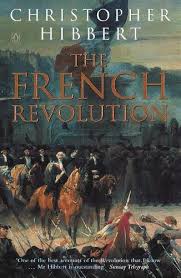
By Christopher Hibbert.
I think most of us have heard of the French Revolution and perhaps some of the characters in it. Up until reading this book however, the closest I’d come was playing Assassins Creed Unity! The French Revolution was a period of political and societal change in France that began with the Estates General of 1789 and ended with the a coup in November 1799. Many of the revolution’s ideas are considered fundamental principles of liberal democracy, and its values remain central to modern French political discourse. It was caused by a combination of social, political, and economic factors.
Financial crisis and widespread social distress led to a series of events including the creation of a National Assembly in June. The Storming of the Bastille, state control over the Catholic Church in France, and issuing the Declaration of the Rights of Man and of the Citizen.
The next three years were dominated by a struggle for political control ending with the replacement of King Louis XVI‘s by the French First Republic in September, followed by the execution of Louis XVI himself in January 1793.
After another revolt in June 1793, the constitution was suspended, and political power passed from the National Convention to the Committee of Public Safety, dominated by radical Jacobins led by Maximilien Robespierre. About 16,000 people were sentenced and executed in the Reign of Terror, which ended in July 1794. Its instability ended in 1799 with the establishment of the Consulate, with Napoleon Bonaparte as First Consul.
This is also the first book by Christopher Hibbert that I’ve read. I do own others, yet to be read, and after reading this book I look forward to reading them as well.
The book is fairly small for such a large topic and it’s written in an exciting way, with personal accounts, mixed with story telling and plenty of detail covering the period of 1789 to 1795 and the death of the King and the rise of Napoleon to power.
It must have been a terrible period of history to have live through. The Reign of Terror is aptly named. The reasons for some of the executions and the manner of their deaths makes horrendous reading. It really bring to the fore, the lust for power that some people have and the lengths that they will go to in order to justify and (ab)use it.
For a more fictional account of the French Revolution, Hilary Mantel of Wolf Hall fame, did a great book called A Greater Place of Safety. Is Les Miserables worth a read I wonder?