By Juliet Barker.
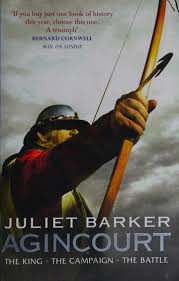
Agincourt took place on 25 October 1415 and was a turning-point not only in the Hundred Years War between England and France but also in the history of weaponry. Azincourt (as it is now) is in the Pas-de-Calais, and the French were famously defeated by an army led by Henry V. Henry V’s stunning victory revived England’s military prestige and greatly strengthened his territorial claims in France. The exhausted English army of about 9,000 men was engaged by 20,000 Frenchmen, but the limited space of battle favoured the more compact English forces. The undisciplined charges of the French combined with the exceptional skill of the English archers contributed to a pivotal moment in European warfare. Not more than 1,600 English soldiers died; the French probably lost more than 6,000 men.
A book that covers much more than just the battle itself. It explains the history of the age, the people and the politics – mad kings, scheming bishops, knights, surgeons and archers.
It introduces Henry V and is journey from Prince of Wales to King of England and France. The book covers the huge lengths he and he country went to in the campaign and the battle itself.
We read descriptions of the chivalry of the men involved. I hadn’t realised the shattering impact of the battle on the French nobility with the amount of them killed by a relatively small army of men, on their last legs, suffering from dysentery and other diseases.
It makes you appreciate why the battle still holds a special place in the history of England.
A very scholarly book, packed with information, but very easy and enjoyable to read.
My favourite film on the topic (even if not wholly accurate!):